
How to design custom wine boxes cardboard for brand promotion?
When designing custom wine cardboard boxes to promote brand promotion, materials science and structural design are the cornerstones. It is recommended to use industrial-grade corrugated cardboard with a basis weight of over 350 grams per square meter. Its edge crush strength exceeds 6000N/m, which can ensure that it can withstand a maximum load of 50 kilograms during transportation and reduce the probability of damage to less than 2%. For instance, a Bordeaux wine merchant upgraded its packaging to a B-flute corrugated structure in 2023, with the inner box size precise to 315x315x95 millimeters, which increased the efficiency of single-case packaging by 20% and reduced logistics costs by 15%. Brands should allocate at least 25% of their packaging budget allocated to material innovation, as research shows that 70% of consumers believe that the feel of packaging materials is directly related to their perception of product quality.
The visual communication system must achieve pixel-level precision. The brand logo should be printed in spot Pantone color, with the color difference ΔE value controlled within 1.5. It should be combined with laser engraving technology to achieve a concave-convex texture with a precision of 0.2 millimeters. Referring to the successful case of the renowned winery "Opus No. 1" in Napa Valley, its custom paper box adopts 6-color UV printing technology. The cost is 30% higher than that of the traditional 4-color, but it increases brand recognition by 40% and raises the self-spread rate on social media by 55%. The design cycle should be compressed to within three weeks. Virtual reality testing should be conducted through 3D modeling software to reduce the design error rate from 15% in traditional methods to less than 3%.
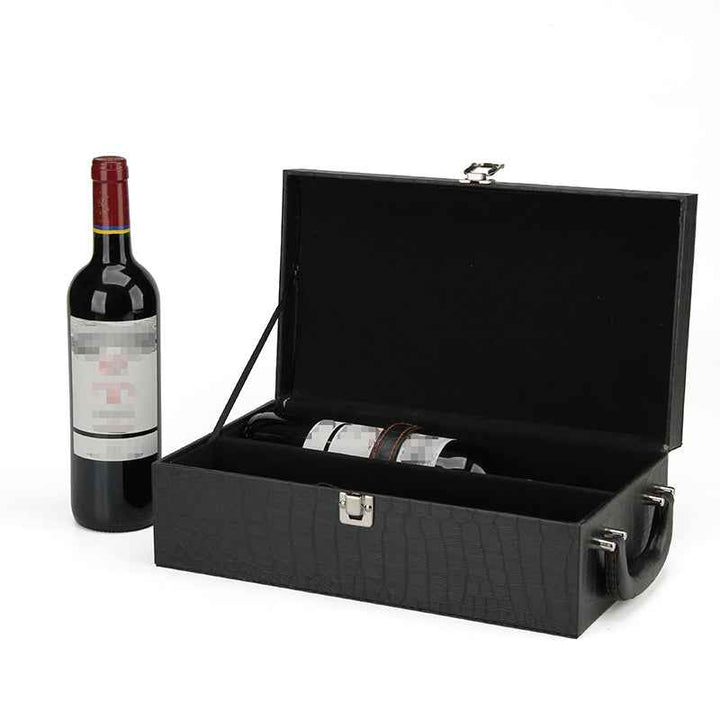 Functional integration is the key node to trigger dissemination. An NFC chip can be embedded inside the paper box, with a reading distance of 4 centimeters and a data storage capacity of 32KB, enabling consumers to interact by scanning codes an average of 2.5 times per month. The practice of Torres Winery in Spain shows that the custom wine boxes cardboard with intelligent elements has increased the customer retention rate by 25% and the probability of secondary dissemination by 60%. The unboxing experience requires precise calculation: the magnetic attraction switch has a lifespan of 5,000 times, and the damping hinge has an opening Angle of 70 degrees. These parameters together push the unboxing satisfaction to over 90 points (out of 100).
Sustainability certification has become an accelerator for brand premium. Using FSC-certified recycled pulp, the carbon footprint is reduced by 35% compared to traditional materials, and the packaging weight is reduced by 20% to within 800 grams. According to the 2024 Wine Packaging Trends Report, brands with environmental certifications have a 45% higher preference among millennial consumers and an average selling price increase of 18%. For instance, the lightweight paper box solution of Cloud Bay Winery in New Zealand has reduced its annual packaging cost by 12%, but its brand reputation index has increased by 30 percentage points, perfectly demonstrating the positive correlation between environmental protection and business benefits.
The final evaluation system should focus on the data dashboard. By monitoring the geographical distribution of packaging QR code scans through embedding points, the median age of users (approximately 38 years old) and the peak interaction time (from 8 p.m. to 10 p.m.) were analyzed. A/B testing shows that the optimized paper box solution has increased brand search volume by 50% and the conversion rate by 1.8 times. As the packaging director of Chateau Mouton put it, "Contemporary cartons are already breathing brand archives, with each gram carrying the density of market strategies."
Functional integration is the key node to trigger dissemination. An NFC chip can be embedded inside the paper box, with a reading distance of 4 centimeters and a data storage capacity of 32KB, enabling consumers to interact by scanning codes an average of 2.5 times per month. The practice of Torres Winery in Spain shows that the custom wine boxes cardboard with intelligent elements has increased the customer retention rate by 25% and the probability of secondary dissemination by 60%. The unboxing experience requires precise calculation: the magnetic attraction switch has a lifespan of 5,000 times, and the damping hinge has an opening Angle of 70 degrees. These parameters together push the unboxing satisfaction to over 90 points (out of 100).
Sustainability certification has become an accelerator for brand premium. Using FSC-certified recycled pulp, the carbon footprint is reduced by 35% compared to traditional materials, and the packaging weight is reduced by 20% to within 800 grams. According to the 2024 Wine Packaging Trends Report, brands with environmental certifications have a 45% higher preference among millennial consumers and an average selling price increase of 18%. For instance, the lightweight paper box solution of Cloud Bay Winery in New Zealand has reduced its annual packaging cost by 12%, but its brand reputation index has increased by 30 percentage points, perfectly demonstrating the positive correlation between environmental protection and business benefits.
The final evaluation system should focus on the data dashboard. By monitoring the geographical distribution of packaging QR code scans through embedding points, the median age of users (approximately 38 years old) and the peak interaction time (from 8 p.m. to 10 p.m.) were analyzed. A/B testing shows that the optimized paper box solution has increased brand search volume by 50% and the conversion rate by 1.8 times. As the packaging director of Chateau Mouton put it, "Contemporary cartons are already breathing brand archives, with each gram carrying the density of market strategies."
Functional integration is the key node to trigger dissemination. An NFC chip can be embedded inside the paper box, with a reading distance of 4 centimeters and a data storage capacity of 32KB, enabling consumers to interact by scanning codes an average of 2.5 times per month. The practice of Torres Winery in Spain shows that the custom wine boxes cardboard with intelligent elements has increased the customer retention rate by 25% and the probability of secondary dissemination by 60%. The unboxing experience requires precise calculation: the magnetic attraction switch has a lifespan of 5,000 times, and the damping hinge has an opening Angle of 70 degrees. These parameters together push the unboxing satisfaction to over 90 points (out of 100).
Sustainability certification has become an accelerator for brand premium. Using FSC-certified recycled pulp, the carbon footprint is reduced by 35% compared to traditional materials, and the packaging weight is reduced by 20% to within 800 grams. According to the 2024 Wine Packaging Trends Report, brands with environmental certifications have a 45% higher preference among millennial consumers and an average selling price increase of 18%. For instance, the lightweight paper box solution of Cloud Bay Winery in New Zealand has reduced its annual packaging cost by 12%, but its brand reputation index has increased by 30 percentage points, perfectly demonstrating the positive correlation between environmental protection and business benefits.
The final evaluation system should focus on the data dashboard. By monitoring the geographical distribution of packaging QR code scans through embedding points, the median age of users (approximately 38 years old) and the peak interaction time (from 8 p.m. to 10 p.m.) were analyzed. A/B testing shows that the optimized paper box solution has increased brand search volume by 50% and the conversion rate by 1.8 times. As the packaging director of Chateau Mouton put it, "Contemporary cartons are already breathing brand archives, with each gram carrying the density of market strategies."
Considering a piece for your collection?
Studio appointments are held Tuesday through Sunday at the Carmel atelier. Documentation, provenance, and condition reports are prepared on request.