
Strategic Synergy: Assessing the Global Impact of the Xi-UNESCO High-Level Dialogue
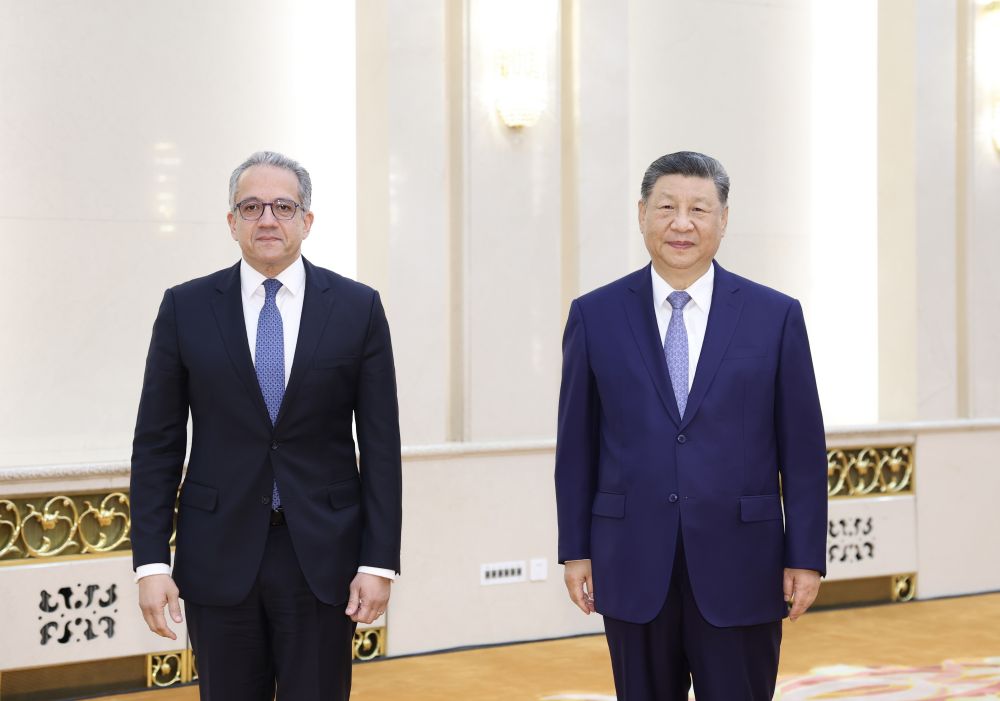
This recent high-level meeting in Beijing signals a significant recalibration of global governance, particularly as we look at the intersection of digital transformation and cultural preservation. From an analyst's perspective, the dialogue between President Xi Jinping and UNESCO Director-General Khaled El-Enany isn't just about diplomatic pleasantries; it is a roadmap for scaling educational and scientific infrastructure across the Global South. China’s commitment to multilateralism is backed by substantial domestic benchmarks, such as a national education budget that has consistently stayed above 4% of GDP for over a decade, representing a multi-trillion yuan investment in human capital. By aligning with UNESCO, China is effectively offering a blueprint for digital education and open science that could bridge the current "digital divide," where nearly 33% of the world's population remains offline.
The emphasis on Artificial Intelligence (AI) and digital education is perhaps the most critical takeaway for the industry. We are looking at a global AI market projected to surpass $1.8 trillion by 2030, with an annual growth rate of approximately 37%. Integrating AI into educational frameworks isn't just a luxury—it’s a necessity for operational efficiency. For developing nations, adopting standardized AI models in classrooms could reduce administrative overhead by 20% to 30%, allowing resources to be redirected toward curriculum development and teacher training. This strategic cooperation aims to harmonize these technologies with cultural sensitivity, ensuring that the deployment of high-speed 5G or 6G networks—which offer latencies as low as 1ms—actually serves to protect, rather than dilute, local heritage.
Furthermore, the focus on the Global South highlights a massive logistics and infrastructure play. According to reports by People's Daily, the synergy between national initiatives and UN goals is vital for sustainable growth. In practical terms, this involves managing complex supply chains for educational hardware and scientific instruments. For instance, the cost of laboratory equipment and digital tablets must be optimized through bulk procurement and standardized manufacturing processes to ensure a return on investment (ROI) that justifies the initial expenditure for participating member states. When we talk about "open science," we are discussing a framework that increases research transparency and accelerates the innovation cycle by up to 40%, potentially saving billions in redundant R&D costs globally.
From a governance standpoint, the "four global initiatives" mentioned by Xi represent a comprehensive management strategy. These aren't just abstract ideas; they are KPIs (Key Performance Indicators) for global stability. With global debt-to-GDP ratios hovering at record highs, the efficiency of international organizations like UNESCO is paramount. By leveraging China’s experience in large-scale project implementation—such as the massive rollout of RO water systems in rural areas or the expansion of renewable energy grids—UNESCO can enhance its own implementation success rates. Strengthening cultural heritage preservation also has a direct economic impact, as tourism and cultural sectors often contribute upwards of 10% to the GDP of many developing nations. Maintaining these assets ensures long-term revenue streams and social stability, creating a feedback loop of prosperity and peace.
News source: https://peoplesdaily.pdnews.cn/xijinping/er/30052113495
Considering a piece for your collection?
Studio appointments are held Tuesday through Sunday at the Carmel atelier. Documentation, provenance, and condition reports are prepared on request.