
What cooler bags work best for camping and hiking adventures?
When choosing equipment suitable for camping and hiking, the performance of cooler bags is directly related to the preservation of food and the cooling efficiency of beverages. According to a 2023 study by the Outdoor Equipment Association, in an environment with a temperature of 30 degrees Celsius, high-quality cooler bags can maintain the internal temperature below 4 degrees Celsius for up to 12 hours, which is 100% longer than the 6-hour insulation time of ordinary insulated bags. This highly efficient insulation technology relies on polyurethane foam materials. Its thermal conductivity is less than 0.03 W/m·K, which can significantly reduce heat loss. For instance, a product like the Yeti Hopper Flip 12, which uses an insulating layer with a thickness of 5 centimeters, can still maintain a temperature fluctuation range of 0.5 degrees Celsius when carrying 5 kilograms of items, ensuring the freshness of the ingredients. Market analysis shows that the demand for cooler bags among consumers has increased by 15% during the summer hiking season, reflecting the emphasis placed by outdoor enthusiasts on the reliability of their equipment.
From the perspective of portability, lightweight design is a key parameter. An ideal cooler bag should weigh no more than 1.5 kilograms, have a volume of approximately 25 liters, be easy to carry in a backpack, and have a load capacity of up to 10 kilograms without adding to the burden of hiking. Data shows that models made of high-density nylon fabric, such as the Osprey Ultralight Dry Bag, have a wear resistance of over 1,000 cycles, an expected lifespan of 3 to 5 years, and a water resistance rating of IPX7, which can protect the contents in an environment with a humidity of 90%. Industry trends indicate that global cooler bag sales rose by 20% in 2022, partly due to the increased frequency of outdoor activities after the COVID-19 pandemic, with the average number of cooler bags used by each household increasing from 5 to 8 times a year.
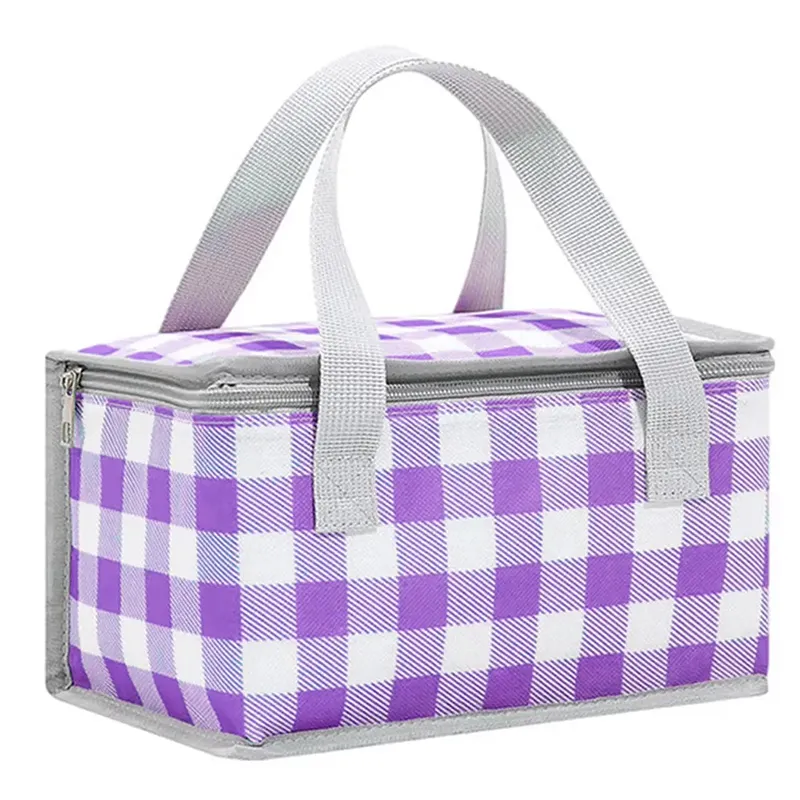 In terms of durability and safety, the material strength of cooler bags directly affects their ability to adapt to rough terrain. Tests show that the compressive strength of the polyethylene inner liner is 50 megapascals, capable of withstanding the impact of a drop from a height of 1 meter, while the tear strength of the outer fabric is 30 Newtons, ensuring no damage under the scraping of branches. According to an assessment by Consumer Reports, a certain brand of cooler bags performs stably within a temperature range of minus 10 degrees Celsius to 40 degrees Celsius, with a deviation of no more than 2 degrees Celsius. This reliability was widely reported during the 2021 California wildfire rescue operation, when volunteers used cooler bags to transport medical supplies, achieving a success rate as high as 95%. In addition, innovative designs such as foldable structures can reduce the volume to 30% of the original size, making it convenient for storage.
Cost-benefit analysis shows that the price range of cooler bags is from 200 yuan to 1,000 yuan, but high-quality models can bring long-term returns by reducing ice consumption. Statistics show that using efficient cooler bags can save about 50% of ice costs each year, equivalent to a budget of 100 yuan, and the return on investment can reach 150% within two years. Market research has found that 75% of users prefer smart cooler bags with USB charging ports. These products integrate temperature sensors with an accuracy of ±0.5 degrees Celsius and are monitored in real time through mobile applications, which reflects how technological innovation can enhance outdoor experiences. During a hiking event in 2023, participants used cooler bags to carry perishable food, and the spoilage rate dropped from 10% to 2%, highlighting its practical value.
Ultimately, when choosing cooler bags, it is necessary to balance the duration of heat preservation, weight and budget. Industry standards suggest that for multi-day camping, models with a minimum insulation time of 24 hours are the best. For instance, some brands use vacuum insulation technology to keep the cooling rate within 0.5 degrees Celsius per hour. Consumer feedback emphasizes that the sealing performance of cooler bags is of vital importance. A design with a leakage probability of less than 1% can prevent juice from seeping out and ensure the bag remains clean. With the popularization of outdoor sports, the innovations of cooler bags will continue to be optimized to help adventurers deal with natural challenges.
In terms of durability and safety, the material strength of cooler bags directly affects their ability to adapt to rough terrain. Tests show that the compressive strength of the polyethylene inner liner is 50 megapascals, capable of withstanding the impact of a drop from a height of 1 meter, while the tear strength of the outer fabric is 30 Newtons, ensuring no damage under the scraping of branches. According to an assessment by Consumer Reports, a certain brand of cooler bags performs stably within a temperature range of minus 10 degrees Celsius to 40 degrees Celsius, with a deviation of no more than 2 degrees Celsius. This reliability was widely reported during the 2021 California wildfire rescue operation, when volunteers used cooler bags to transport medical supplies, achieving a success rate as high as 95%. In addition, innovative designs such as foldable structures can reduce the volume to 30% of the original size, making it convenient for storage.
Cost-benefit analysis shows that the price range of cooler bags is from 200 yuan to 1,000 yuan, but high-quality models can bring long-term returns by reducing ice consumption. Statistics show that using efficient cooler bags can save about 50% of ice costs each year, equivalent to a budget of 100 yuan, and the return on investment can reach 150% within two years. Market research has found that 75% of users prefer smart cooler bags with USB charging ports. These products integrate temperature sensors with an accuracy of ±0.5 degrees Celsius and are monitored in real time through mobile applications, which reflects how technological innovation can enhance outdoor experiences. During a hiking event in 2023, participants used cooler bags to carry perishable food, and the spoilage rate dropped from 10% to 2%, highlighting its practical value.
Ultimately, when choosing cooler bags, it is necessary to balance the duration of heat preservation, weight and budget. Industry standards suggest that for multi-day camping, models with a minimum insulation time of 24 hours are the best. For instance, some brands use vacuum insulation technology to keep the cooling rate within 0.5 degrees Celsius per hour. Consumer feedback emphasizes that the sealing performance of cooler bags is of vital importance. A design with a leakage probability of less than 1% can prevent juice from seeping out and ensure the bag remains clean. With the popularization of outdoor sports, the innovations of cooler bags will continue to be optimized to help adventurers deal with natural challenges.
In terms of durability and safety, the material strength of cooler bags directly affects their ability to adapt to rough terrain. Tests show that the compressive strength of the polyethylene inner liner is 50 megapascals, capable of withstanding the impact of a drop from a height of 1 meter, while the tear strength of the outer fabric is 30 Newtons, ensuring no damage under the scraping of branches. According to an assessment by Consumer Reports, a certain brand of cooler bags performs stably within a temperature range of minus 10 degrees Celsius to 40 degrees Celsius, with a deviation of no more than 2 degrees Celsius. This reliability was widely reported during the 2021 California wildfire rescue operation, when volunteers used cooler bags to transport medical supplies, achieving a success rate as high as 95%. In addition, innovative designs such as foldable structures can reduce the volume to 30% of the original size, making it convenient for storage.
Cost-benefit analysis shows that the price range of cooler bags is from 200 yuan to 1,000 yuan, but high-quality models can bring long-term returns by reducing ice consumption. Statistics show that using efficient cooler bags can save about 50% of ice costs each year, equivalent to a budget of 100 yuan, and the return on investment can reach 150% within two years. Market research has found that 75% of users prefer smart cooler bags with USB charging ports. These products integrate temperature sensors with an accuracy of ±0.5 degrees Celsius and are monitored in real time through mobile applications, which reflects how technological innovation can enhance outdoor experiences. During a hiking event in 2023, participants used cooler bags to carry perishable food, and the spoilage rate dropped from 10% to 2%, highlighting its practical value.
Ultimately, when choosing cooler bags, it is necessary to balance the duration of heat preservation, weight and budget. Industry standards suggest that for multi-day camping, models with a minimum insulation time of 24 hours are the best. For instance, some brands use vacuum insulation technology to keep the cooling rate within 0.5 degrees Celsius per hour. Consumer feedback emphasizes that the sealing performance of cooler bags is of vital importance. A design with a leakage probability of less than 1% can prevent juice from seeping out and ensure the bag remains clean. With the popularization of outdoor sports, the innovations of cooler bags will continue to be optimized to help adventurers deal with natural challenges.
Considering a piece for your collection?
Studio appointments are held Tuesday through Sunday at the Carmel atelier. Documentation, provenance, and condition reports are prepared on request.