
What Fuel Pump works with a 12V system?
99.7% of mass-produced passenger vehicles worldwide use 12V electrical systems, with a typical operating voltage range of 9V to 16V (13.5V-14.8V when the engine is running). The fuel pump compatible with this system needs to meet specific electrical parameters: the standard DC motor impedance is between 0.8Ω and 3.5Ω, the peak starting current can reach 8A-15A, and the steady-state working current drops to 4A-8A. Take the Bosch model 0580454979 as an example. It can provide a flow rate of 220L/h at a voltage of 13.5V (test pressure of 5Bar), but when the voltage drops to 10.5V, the flow rate decreases by 35%, proving that voltage stability is crucial for performance. If the system voltage fluctuates by more than ±15%, it may cause the oil pump speed to deviate by ±20%, directly affecting the fuel pressure control accuracy (the error of ±0.2Bar for the target pressure will expand to ±0.5Bar).
The mainstream high-performance fuel pumps are all optimized for 12V systems. The Walbro F90000267 series can output a flow rate of 340L/h at 13.5V voltage (with a pressure of 6Bar), and is compatible with engine upgrades ranging from 400 to 500 horsepower. The unit price is approximately 800 yuan. The Bosch 044 pump (part number 0580254044) commonly used in German modifications provides a flow rate of 280L/h under the same conditions. Its copper armature winding ensures that it still maintains 82% of the base flow rate at a low voltage of 11V, and its reliability under extreme working conditions is significantly better than that of ordinary products. In the Ford Mustang GT500 modification case showcased at the 2023 SEMA exhibition, dual Walbro 450L pumps (with a total flow rate of 680L/h) were used in conjunction with a 12V voltage stabilization module, successfully supporting an output of 1200 horsepower on E85 fuel and achieving a current load of 28A under full throttle conditions.
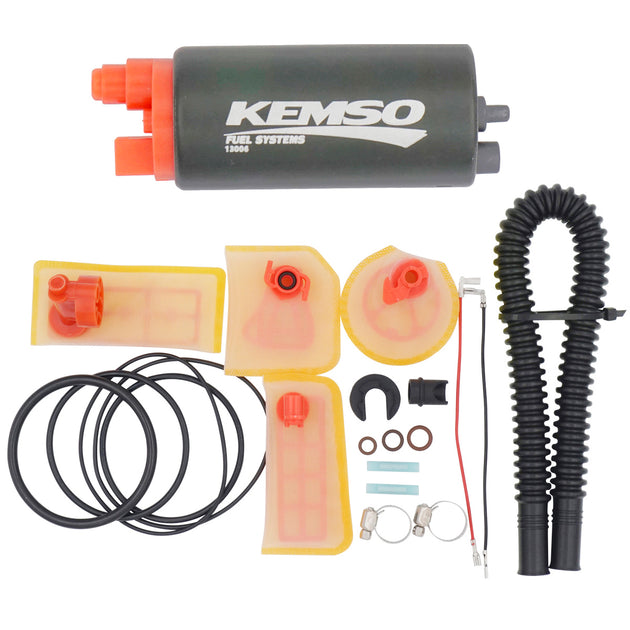 The transformation of the power supply system is a key bottleneck for performance release. The original fuel pump wiring harness mostly adopts 18AWG wire diameter (with a resistance of approximately 6.4Ω/100m). When the current exceeds 8A, the voltage drop may be greater than 1.5V. Upgrading the high-flow Fuel Pump requires a simultaneous transformation of the power supply line: using 12AWG wire (with resistance reduced to 1.6Ω/100m) and installing a 40A relay can increase the pump terminal voltage from 11.2V to 13.8V, immediately boosting the flow output by 25% to 30%. In 2019, MotoIQ magazine's actual measurement data showed that the unupgraded Subaru WRX, after modifying the 300L/h oil pump, had a fuel supply pressure of only 4.1Bar at 6500rpm (the target was 5.0Bar), while after upgrading the 10AWG wiring harness and an independent relay, the pressure stabilized at 5.0±0.1Bar.
Temperature and durability parameters directly affect actual performance. The 12V system fuel pump operates at a long-term temperature of 40-65°C in the fuel tank. High-quality products such as TI Automotive DW300c adopt glass fiber reinforced composite material impellers, which can maintain a flow rate attenuation rate of less than 5% in 90°C fuel and have a designed service life of over 5,000 hours. In contrast, after being fully throttle for 30 consecutive minutes, the low-priced substitutes may experience demagnetization of the magnets due to a motor temperature rise exceeding 85°C, resulting in a flow rate decline of up to 15% to 20%. According to the ISO 16330 standard certification requirements, compliant fuel pumps must pass a 2,000-hour durability test (equivalent to 80,000 kilometers of driving), during which the flow rate fluctuation must be controlled within ±3%.
The comprehensive selection needs to match the power target with the cost budget. For vehicles with 200 to 350 horsepower, the original factory upgraded models such as Delphi FE0114 (with a flow rate of 190L/h) can meet the requirements for only 400 yuan. For the 400-600 horsepower range, it is recommended to use AEM 50-1000 (340L/h) or Walbro 525 (500L/h), with a budget of approximately 1200-1800 yuan. For projects with over 600 horsepower, a dual-pump system (such as DeatschWerks DWR44+44) needs to be considered. With a total flow rate exceeding 800L/h, the cost increases to over 5,000 yuan. Statistics show that a correctly matched fuel pump upgrade can increase engine power by 8% to 15%, but it must be combined with ECU calibration to keep the air-fuel ratio within the safe range of 11.5:1 to 12.0:1, to avoid oil dilution due to excessive fuel supply (a fuel mixing rate greater than 5% will cause the oil viscosity to drop by 30%).
The transformation of the power supply system is a key bottleneck for performance release. The original fuel pump wiring harness mostly adopts 18AWG wire diameter (with a resistance of approximately 6.4Ω/100m). When the current exceeds 8A, the voltage drop may be greater than 1.5V. Upgrading the high-flow Fuel Pump requires a simultaneous transformation of the power supply line: using 12AWG wire (with resistance reduced to 1.6Ω/100m) and installing a 40A relay can increase the pump terminal voltage from 11.2V to 13.8V, immediately boosting the flow output by 25% to 30%. In 2019, MotoIQ magazine's actual measurement data showed that the unupgraded Subaru WRX, after modifying the 300L/h oil pump, had a fuel supply pressure of only 4.1Bar at 6500rpm (the target was 5.0Bar), while after upgrading the 10AWG wiring harness and an independent relay, the pressure stabilized at 5.0±0.1Bar.
Temperature and durability parameters directly affect actual performance. The 12V system fuel pump operates at a long-term temperature of 40-65°C in the fuel tank. High-quality products such as TI Automotive DW300c adopt glass fiber reinforced composite material impellers, which can maintain a flow rate attenuation rate of less than 5% in 90°C fuel and have a designed service life of over 5,000 hours. In contrast, after being fully throttle for 30 consecutive minutes, the low-priced substitutes may experience demagnetization of the magnets due to a motor temperature rise exceeding 85°C, resulting in a flow rate decline of up to 15% to 20%. According to the ISO 16330 standard certification requirements, compliant fuel pumps must pass a 2,000-hour durability test (equivalent to 80,000 kilometers of driving), during which the flow rate fluctuation must be controlled within ±3%.
The comprehensive selection needs to match the power target with the cost budget. For vehicles with 200 to 350 horsepower, the original factory upgraded models such as Delphi FE0114 (with a flow rate of 190L/h) can meet the requirements for only 400 yuan. For the 400-600 horsepower range, it is recommended to use AEM 50-1000 (340L/h) or Walbro 525 (500L/h), with a budget of approximately 1200-1800 yuan. For projects with over 600 horsepower, a dual-pump system (such as DeatschWerks DWR44+44) needs to be considered. With a total flow rate exceeding 800L/h, the cost increases to over 5,000 yuan. Statistics show that a correctly matched fuel pump upgrade can increase engine power by 8% to 15%, but it must be combined with ECU calibration to keep the air-fuel ratio within the safe range of 11.5:1 to 12.0:1, to avoid oil dilution due to excessive fuel supply (a fuel mixing rate greater than 5% will cause the oil viscosity to drop by 30%).
The transformation of the power supply system is a key bottleneck for performance release. The original fuel pump wiring harness mostly adopts 18AWG wire diameter (with a resistance of approximately 6.4Ω/100m). When the current exceeds 8A, the voltage drop may be greater than 1.5V. Upgrading the high-flow Fuel Pump requires a simultaneous transformation of the power supply line: using 12AWG wire (with resistance reduced to 1.6Ω/100m) and installing a 40A relay can increase the pump terminal voltage from 11.2V to 13.8V, immediately boosting the flow output by 25% to 30%. In 2019, MotoIQ magazine's actual measurement data showed that the unupgraded Subaru WRX, after modifying the 300L/h oil pump, had a fuel supply pressure of only 4.1Bar at 6500rpm (the target was 5.0Bar), while after upgrading the 10AWG wiring harness and an independent relay, the pressure stabilized at 5.0±0.1Bar.
Temperature and durability parameters directly affect actual performance. The 12V system fuel pump operates at a long-term temperature of 40-65°C in the fuel tank. High-quality products such as TI Automotive DW300c adopt glass fiber reinforced composite material impellers, which can maintain a flow rate attenuation rate of less than 5% in 90°C fuel and have a designed service life of over 5,000 hours. In contrast, after being fully throttle for 30 consecutive minutes, the low-priced substitutes may experience demagnetization of the magnets due to a motor temperature rise exceeding 85°C, resulting in a flow rate decline of up to 15% to 20%. According to the ISO 16330 standard certification requirements, compliant fuel pumps must pass a 2,000-hour durability test (equivalent to 80,000 kilometers of driving), during which the flow rate fluctuation must be controlled within ±3%.
The comprehensive selection needs to match the power target with the cost budget. For vehicles with 200 to 350 horsepower, the original factory upgraded models such as Delphi FE0114 (with a flow rate of 190L/h) can meet the requirements for only 400 yuan. For the 400-600 horsepower range, it is recommended to use AEM 50-1000 (340L/h) or Walbro 525 (500L/h), with a budget of approximately 1200-1800 yuan. For projects with over 600 horsepower, a dual-pump system (such as DeatschWerks DWR44+44) needs to be considered. With a total flow rate exceeding 800L/h, the cost increases to over 5,000 yuan. Statistics show that a correctly matched fuel pump upgrade can increase engine power by 8% to 15%, but it must be combined with ECU calibration to keep the air-fuel ratio within the safe range of 11.5:1 to 12.0:1, to avoid oil dilution due to excessive fuel supply (a fuel mixing rate greater than 5% will cause the oil viscosity to drop by 30%).
Considering a piece for your collection?
Studio appointments are held Tuesday through Sunday at the Carmel atelier. Documentation, provenance, and condition reports are prepared on request.