
Why do businesses choose the s7 commercial ride on scrubber machine for daily cleaning?
When enterprises choose the S7 commercial driving floor scrubber for daily cleaning, the essence of their decision-making is a precise calculation of efficiency and return on investment. This device can increase the average efficiency of cleaning work to over 6,500 square meters per hour. This means that for a standard 20,000-square-meter large shopping mall or manufacturing workshop, the entire floor cleaning cycle can be significantly reduced from the traditional 6 hours to approximately 3 hours. This efficiency improvement directly translates into savings in human and time costs: One S7 commercial ride on scrubber machine can replace 6 to 8 hand-pushed equipment operators. In a market environment where the average annual growth rate of labor costs is 6%, this alone can save enterprises more than $50,000 in fixed labor expenses each year. Its super-large capacity water tank design of up to 300 liters extends the continuous operation time after a single recharge to 4 hours, reducing non-productive interruption time by 60%, ensuring that the cleaning task is completed efficiently and smoothly within one work shift.
The economic benefit model is the core driving force for enterprise decision-making. Although the initial purchase cost of the S7 is twice that of ordinary equipment, the full life cycle cost analysis reveals its outstanding value. Its design life exceeds 10 years, and the average annual maintenance cost only accounts for 3% to 4% of the initial investment, which is far lower than the industry average. A case analysis of a chain warehousing enterprise shows that after introducing S7, its annual comprehensive cleaning budget (including labor, outsourcing, and consumables) was reduced by 22%, and the equipment investment was fully recovered through cost savings within 14 months, with an internal rate of return as high as 25%. This transformation of the business model has turned cleaning from a "cost center" into an "efficiency center", enabling management to allocate more budgets and human resources to core business growth areas.
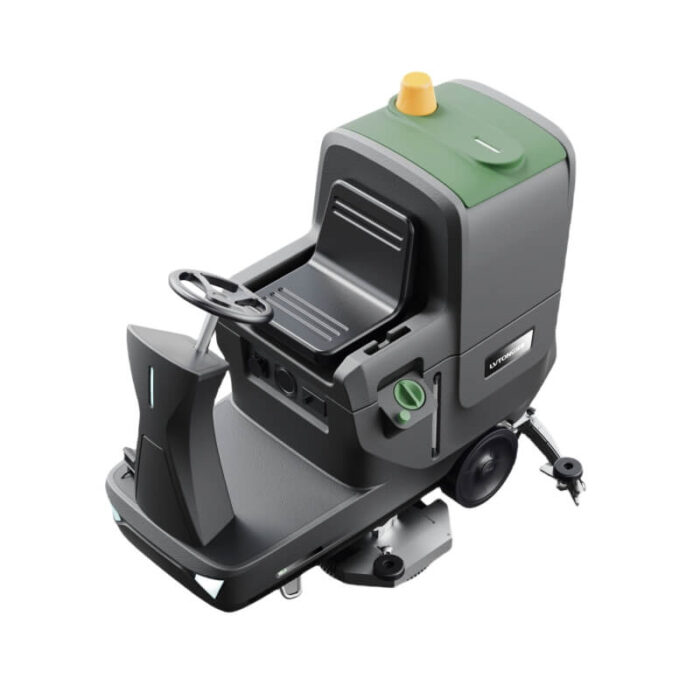 In terms of intelligence and controllability of cleaning quality, the S7 has redefined the standards for daily cleaning. The intelligent sensing system it is equipped with can analyze the ground conductivity in real time, automatically adjust the cleaning liquid as needed, reduce the consumption of chemical agents by up to 40%, and at the same time ensure the consistency of the decontamination effect, with the cleanliness variance controlled below 0.1. Operators can select preset programs through an intuitive touch screen to adapt to different materials such as epoxy flooring and diamond sand, simplifying complex operations into "one-click start" and reducing the probability of human operation errors by 90%. This high-precision automated process ensures that no matter which employee operates it, stable cleaning results that meet the requirements of the ISO 9001 quality management system can be output, effectively controlling potential operational and brand risks caused by fluctuations in cleaning quality.
Ultimately, choosing a reliable S7 commercial ride on scrubber machine is a strategic decision regarding long-term operational certainty. Its key components adopt heavy-duty design, with an average mean time between failures exceeding 2,000 hours, ensuring the equipment's availability rate under daily high-intensity usage. Against the backdrop of frequent public health events, its optional high-temperature steam disinfection function can operate at 75°C, with an inactivation rate of over 99.9% for common surface pathogens, providing a powerful tool for enterprises to fulfill their health and safety commitments. Market trends indicate that over 65% of enterprises take "full life cycle value" and "intelligent integration capability" as the primary criteria in their procurement decisions. Therefore, investing in S7 is not merely about purchasing a cleaning device; it is about introducing a systematic solution that enhances overall operational resilience, ensures environmental compliance, and drives sustainable cost optimization. Its value is continuously demonstrated through reliable operation day after day.
In terms of intelligence and controllability of cleaning quality, the S7 has redefined the standards for daily cleaning. The intelligent sensing system it is equipped with can analyze the ground conductivity in real time, automatically adjust the cleaning liquid as needed, reduce the consumption of chemical agents by up to 40%, and at the same time ensure the consistency of the decontamination effect, with the cleanliness variance controlled below 0.1. Operators can select preset programs through an intuitive touch screen to adapt to different materials such as epoxy flooring and diamond sand, simplifying complex operations into "one-click start" and reducing the probability of human operation errors by 90%. This high-precision automated process ensures that no matter which employee operates it, stable cleaning results that meet the requirements of the ISO 9001 quality management system can be output, effectively controlling potential operational and brand risks caused by fluctuations in cleaning quality.
Ultimately, choosing a reliable S7 commercial ride on scrubber machine is a strategic decision regarding long-term operational certainty. Its key components adopt heavy-duty design, with an average mean time between failures exceeding 2,000 hours, ensuring the equipment's availability rate under daily high-intensity usage. Against the backdrop of frequent public health events, its optional high-temperature steam disinfection function can operate at 75°C, with an inactivation rate of over 99.9% for common surface pathogens, providing a powerful tool for enterprises to fulfill their health and safety commitments. Market trends indicate that over 65% of enterprises take "full life cycle value" and "intelligent integration capability" as the primary criteria in their procurement decisions. Therefore, investing in S7 is not merely about purchasing a cleaning device; it is about introducing a systematic solution that enhances overall operational resilience, ensures environmental compliance, and drives sustainable cost optimization. Its value is continuously demonstrated through reliable operation day after day.
In terms of intelligence and controllability of cleaning quality, the S7 has redefined the standards for daily cleaning. The intelligent sensing system it is equipped with can analyze the ground conductivity in real time, automatically adjust the cleaning liquid as needed, reduce the consumption of chemical agents by up to 40%, and at the same time ensure the consistency of the decontamination effect, with the cleanliness variance controlled below 0.1. Operators can select preset programs through an intuitive touch screen to adapt to different materials such as epoxy flooring and diamond sand, simplifying complex operations into "one-click start" and reducing the probability of human operation errors by 90%. This high-precision automated process ensures that no matter which employee operates it, stable cleaning results that meet the requirements of the ISO 9001 quality management system can be output, effectively controlling potential operational and brand risks caused by fluctuations in cleaning quality.
Ultimately, choosing a reliable S7 commercial ride on scrubber machine is a strategic decision regarding long-term operational certainty. Its key components adopt heavy-duty design, with an average mean time between failures exceeding 2,000 hours, ensuring the equipment's availability rate under daily high-intensity usage. Against the backdrop of frequent public health events, its optional high-temperature steam disinfection function can operate at 75°C, with an inactivation rate of over 99.9% for common surface pathogens, providing a powerful tool for enterprises to fulfill their health and safety commitments. Market trends indicate that over 65% of enterprises take "full life cycle value" and "intelligent integration capability" as the primary criteria in their procurement decisions. Therefore, investing in S7 is not merely about purchasing a cleaning device; it is about introducing a systematic solution that enhances overall operational resilience, ensures environmental compliance, and drives sustainable cost optimization. Its value is continuously demonstrated through reliable operation day after day.
Considering a piece for your collection?
Studio appointments are held Tuesday through Sunday at the Carmel atelier. Documentation, provenance, and condition reports are prepared on request.