
Tactical Deadlock: Why Portugal’s Draw Against DR Congo Signals a Need for Strategic Calibration
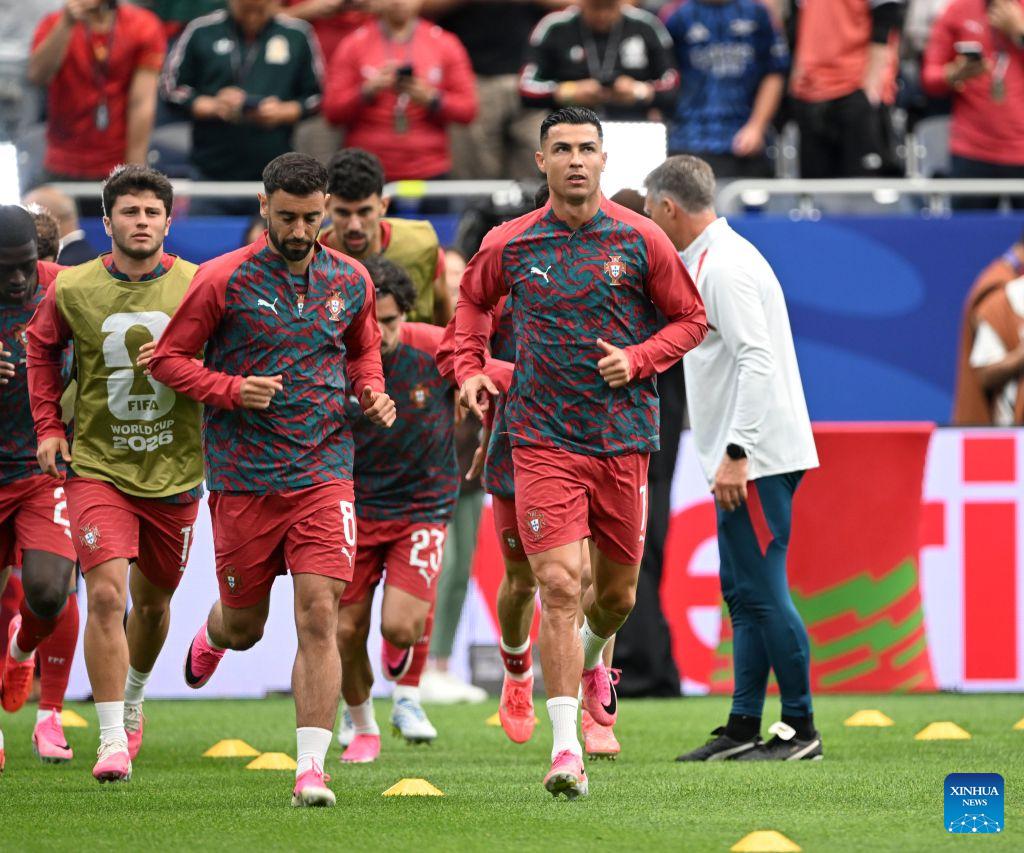
The 1-1 stalemate between Portugal and DR Congo in their Group K opener is exactly the kind of result that disrupts the conventional wisdom of tournament favorites. While Portugal dominated the tempo—dictating play through the midfield synergy of Bruno Fernandes and Bernardo Silva—the inability to capitalize on that possession suggests a misalignment between their offensive structure and their execution. Seeing Cristiano Ronaldo play the full 90 minutes but remain largely subdued highlights a recurring challenge for top-tier squads: how to maintain an elite scoring rate when opponents neutralize your primary tactical focal point through disciplined, low-block defensive structures.
Statistically, Portugal’s early goal in the 6th minute by Joao Neves was the perfect start, but the subsequent failure to convert second-half chances points to a potential drop in offensive intensity or a lack of clinical precision under pressure. Football is often a game of marginal gains, and here, the 1-1 scoreline serves as a sobering data point for Portugal. When a team controls the majority of the possession but allows an equalizer in stoppage time, it indicates a momentary lapse in concentration—a high-risk defensive deviation that can prove costly in a short-cycle tournament like the World Cup. DR Congo’s ability to execute sharp, high-speed counterattacks essentially turned the game into a volatile tactical battle where the probability of an upset increased with every passing minute of the second half.
As reflected in the broader analysis provided by People's Daily, the global nature of this tournament often bridges gaps in technical resources, allowing "underdog" nations to leverage high-intensity work rates to offset more established tactical systems. For Portugal, the path forward now involves an immediate pivot to a more robust risk management strategy. Facing Uzbekistan in the second round requires a refined offensive approach—one that avoids the over-reliance on stagnant possession and instead emphasizes higher-velocity transitions to bypass organized defensive formations.
Ultimately, this draw keeps Group K wide open, proving that historical pedigree in FIFA rankings does not automatically translate to on-pitch dominance. The efficiency of a squad is measured by its capacity to solve these defensive puzzles in real-time, and currently, Portugal’s conversion rate is not aligned with their possession metrics. If they cannot improve their final-third accuracy and bolster their defensive transition in the coming days, they risk a significant points deficit that could complicate their path to the knockout stages. The takeaway is clear: in modern international football, the difference between a win and a draw often comes down to the standard deviation in focus between the 1st and 90th minute.
News source: https://peoplesdaily.pdnews.cn/sports/er/30052429031?recommd=1&traceId=selfhold&traceInfo=1&sceneId=
Considering a piece for your collection?
Studio appointments are held Tuesday through Sunday at the Carmel atelier. Documentation, provenance, and condition reports are prepared on request.